Address
304 North Cardinal St.
Dorchester Center, MA 02124
Work Hours
Monday to Friday: 7AM - 7PM
Weekend: 10AM - 5PM

Address
304 North Cardinal St.
Dorchester Center, MA 02124
Work Hours
Monday to Friday: 7AM - 7PM
Weekend: 10AM - 5PM
Building judgement and capability in complex information environments
Building judgement and capability in complex information environments
 ByKayO
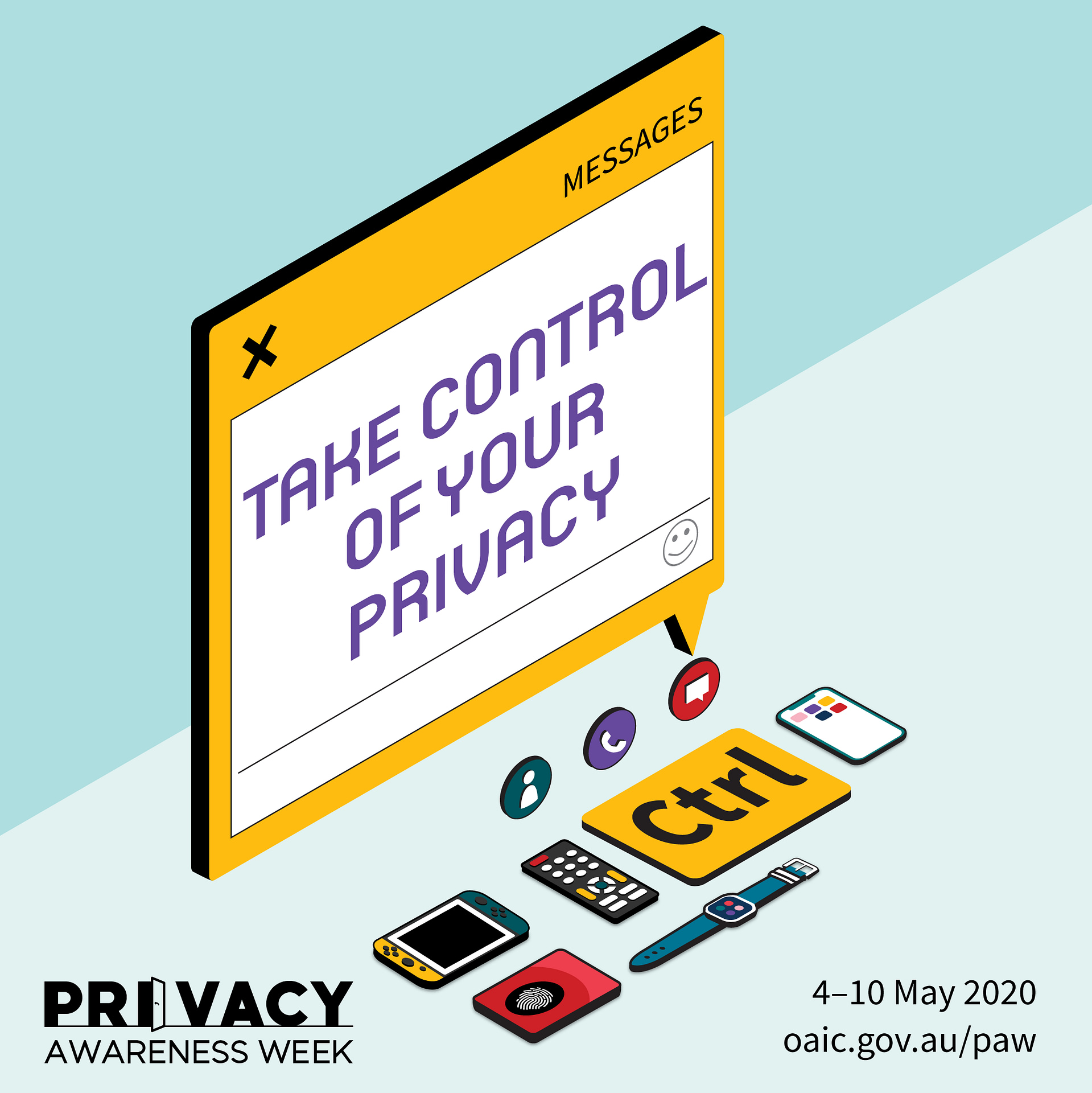
**Disclaimer** The majority of this text was written in 2016 in this blog post. I have added updated information, but what I shared then was even more important today, and so I have reposted it here for Privacy Awareness Week – take time to Reboot Your Privacy!.
When I was nine I had a diary which had a lockable clip on it, which would only open with a special key. I thought it was awesome. My thoughts were completely private – as long as I kept the key secure, no one would be able to access what I had written. Simple times!
For kids today, privacy is a much bigger issue – particularly if they have any interaction online (and really, that’s an awful lot of them). With the move to remote learning in the first months of 2020, that number will have grown even further.
While in 2016, news reports of a website hosting pornographic images of schoolgirls from a minimum of 70 Australian schools brought the topic of privacy into the spotlight, in 2020, the privacy debate has centred around the release of tracking apps which attempt to identify when individuals infected with the Covid-19 virus cross paths with others. What information we choose to keep private and what is shared with and without our knowledge is a highly contentious topic, and as with most things, education and understanding are the best strategies to ensure we maximise our security.
The concept of online privacy is massively complex – and I will freely admit I am no expert. I don’t know many people who are, or if it is even possible to understand it completely. If you are deeply interested in the area, I would definitely direct you towards the work of Patrick Gray, and his Risky Business podcast, and suggest you check out Electronic Frontiers Australia. However, if you are like me, and feel that as a responsible 21st century citizen and as an educator, you should know enough to ensure basic levels of security, then read on!
I’ve blogged before about the importance of secure passwords, but this is just one part of the security puzzle. This video gives a high level overview of the situation:
Even if we password protect our information appropriately, it is still not necessarily safe. This situation is largely (but not totally) because of two reasons. The first, is because even though we may trust our friends and connections with our data, we cannot always trust other humans to be responsible with our data. The second is because of the terms and conditions that we sign when we create an account with many of the major (and minor) social media and other services online. Let’s deal with these one by one.
When we connect with others online, we are granting them tremendous power and responsibility. Being a ‘friend’ on Facebook basically gives that person the key to your online diary, and anything you share with them, they are able to share with others. It is this trust which is often broken in situations where nude photos are published publicly, or when employers may learn something about an employee that it was assumed would remain hidden. In almost all cases, it is better to only share information, images, videos and other data which we would be happy to share publicly. Sharing releases control of data, and once online, it is almost impossible to remove all traces, even if the original is deleted. The ThinkUKnow website is a fabulous resource for teachers and students, and features extensive information on privacy, cybersafety and excellent guidelines outlining the importance of checking the privacy settings on a wide range of different apps. Perhaps some of the adults in the video below could have used this information also!
The concept of online privacy is evolving. While some believe that young people today have no sense of boundaries, are uninformed, and are happy to share every aspect of their life online, research shows that this is not necessarily the case. Young people often demonstrate privacy-protective behaviors, but also have large gaps in their understanding about privacy management at the same time. This suggests that the privacy paradox cannot be attributed solely to either a lack of understanding of or a lack of interest in privacy. Increasingly, it seems that when faced with the complexity of privacy management, many young people (and adults) simply lapse into apathy, feeling powerless to protect their privacy.
This connects to the second reason why our data is not safe, even if we protect it with effective passwords – the terms and conditions of many social media sites often include permission to distribute or collect data which we may not even realise we are sharing.
Although Facebook has, since 2016 when this article was published, supposedly updated the controls users have over their privacy, it is clear that data is still being collected. Facebook can continue to track your browsing even when logged off unless you turn this feature off, as its Pixel software sends information back each time you access a page with a “Like” or “share” button, or an advertisement sourced from its Atlas network. Despite Mark Zuckerberg’s claims that Facebook will set new standards for privacy, even if this happens, it is not the only player in the market.
So how to we combat this ‘privacy fatigue’ and instil students (and ourselves) with confidence that we can take action to manage our privacy more effectively? Fortunately, there are several ways, and they are quite easy to do.

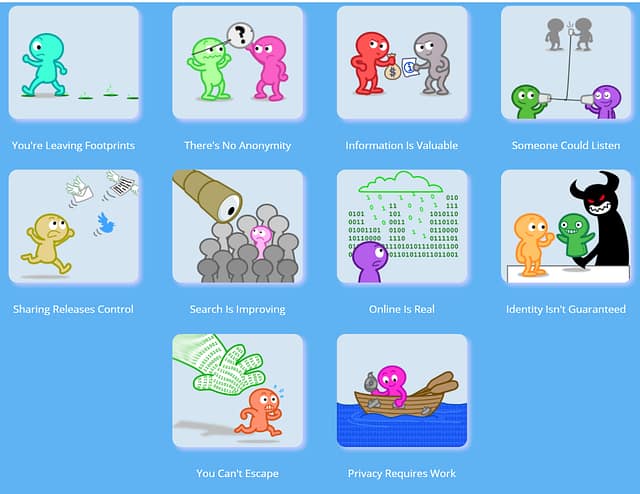
So don’t be overwhelmed by privacy management – see it as a challenge! This is an aspect of digital literacy that is important to us all, even if we have nothing particular to hide – because our privacy is precious, and we will definitely miss it if we lose it.